Showing posts with label Info for Teachers. Show all posts

Wednesday, 25 May 2016

Is Teaching Sustainable?

Author: Francesca Fuoco

During the course of my practicum as a novice teacher, I have met professionals in the field who have been teaching for over 40 years. I find it incredible how some individuals can sustain the same career for decades. What is it about a career that makes it sustainable for so many years? There are many possible definitions for sustainability but for the purpose of this post, I believe that sustainability in the teaching profession requires first a passion for teaching, and second, a balanced work/home lifestyle. If the career path negatively impacts the individual’s well-being, then I would argue that the career path is not sustainable in the long-term.

During my undergraduate studies to become a Science teacher, I took a course on the policies and laws governing the teaching profession in Quebec. On the first day of class, we were told by the professor that 50% of all new teachers drop out of the profession in their first 5 years of teaching. When I first heard this, I did not agree and thought that percentage was way too high and that it did not apply to me in any case because I knew teaching was my calling. Today I now know that my teacher was trying to warn us about the adventure we were about to embark on.
It is a common conception that teachers have the perfect work schedule, with early evenings, Christmas break and peddays at home, and summers off. I used to tell all my friends that the field of teaching is fantastic if you want a family oriented lifestyle, where you have the same schedule as your children and can be around with your family while working a full-time job. Today, I state with confidence that teaching is by far one of the most demanding jobs and the conception of the perfect work schedule is a false dream.

First, to obtain a teaching licence in Quebec, a Bachelors degree is required (or a Masters), which is at least 4 years of University studies. Once you obtain your teaching certificate, you then need to try and find a teaching contract, which are currently very difficult to find. As such, you result to being a substitute teacher for a few years until you find a contract, or if you are lucky, you can find earlier on a 50-70% contract (part-time work load). At this stage in your early career, you are basically hoping a teacher is going to retire, go on sick leave, or go on maternity leave.

Once you do sign a teaching contract, which may or may not be in your field of study, your workload goes above and beyond teaching content to a classroom of students. Apart from teaching your courses, teachers participate in extra-curricular activities which are commonly scheduled after school. Teachers also need to plan their lessons and generate teaching materials which is often done during the evenings at home. They provide remedial help to students during the lunch hour on some days and on the other days they need to supervise the hallways. Teachers need to attend professional development workshops to ensure they stay up-to-date with the most current resources and teaching techniques. Teachers also need to consider each student’s learning style by adapting their teaching methods to accommodate each learner. This part of the job is taken to the next level when Individualized Education Plans (IEPs) need to be considered in which certain students have a legal right to certain accommodations and modifications in the classroom. The biggest component of this job which I think is what affects most teachers’ well-being is the classroom management. I have worked in classrooms which had 7 students and others which had 34 students. Regardless of the numbers, each classroom size comes with its challenges when dealing with children. The teacher is the role model of the classroom and students look up to you and I think this is why the teacher’s emotions can be tugged in all directions. At the end of the day, a teacher does not simply teach. Teachers are also listeners, motivators, leaders, and carers. They play the role of psychologist, doctor, lawyer, and police officer, which is why robots will never put a teacher out of work.

A high school teacher can see on average 100 students in their classroom every day. It can be easy to take home the events that happened in class and it is at this point that the career can impact the teacher’s well-being. During each of my internships, the most honest advice that I received from each of my supervising teachers was to take care of myself first and to not bring the work home. It is OK to have a bad day and to bring your B game to class, teachers cannot always bring their A game. To make it in this career, teachers need to balance what happens in school and what happens outside of school. Exercise, eating-well, and letting go of the day’s events is key to being a sustainable teacher.

You have to love teaching to choose this career. I would like to reiterate that teaching is by far one of the most demanding jobs, but it is also one of the most rewarding careers. Despite the emotional tug-of-war and classroom management horror stories, teachers teach skills that last a life time. Teachers inspire children to learn, to question, and to achieve. There is no better feeling than when you see your students’ eyes light up when they “click” and understand something and say “Oh! I get it!”. That is when I remember why teaching is an amazing career.


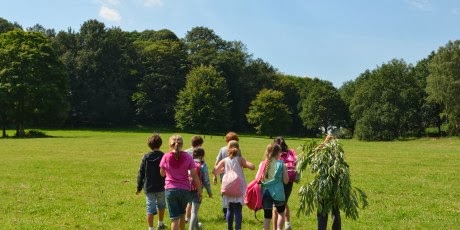
Picture taken by Francesca Fuoco at Ste-Agathe Academy, Ste-Agathe Quebec.


Francesca Fuoco is a 4th year undergraduate student in the Faculty of Education at McGill University. She is currently studying with the goal of teaching Science at the High School level. Francesca is interested in promoting the development of scientific literacy skills among her students by engaging them in learning activities which aim to study how Science affects our society and vice-versa.

Tuesday, 16 December 2014

Sustainability Projects Fund: Dr. Asghar and Collaborators tell us what this blog is all about!

This video showcases the sustainability education initiative at the Faculty of Education at McGill University. It elaborates on some ideas on how to incorporate teachings on sustainability into existing classroom curriculum and how this blog is an excellent tool for collaboration.


Friday, 15 November 2013

The American Academy of Pediatricians issues tougher guidelines for kids’ media use

You read that right. Pediatricians have recently come out with new guidelines for parents regarding the recommended amount of time and access to media, published in the journal Pediatrics. The article linked excessive media use to health problems such as obesity and recommends that children should be limited to less than two hours of entertainment-based screen time per day.

Currently, the average 8 year old spends 8 hours using media, teenagers surpassing 11 hours of of media consumption.

We're hoping that less time in front of a screen means more time outdoors, experiencing the real world!

To read the full article (on some recent big wins for the Children & Nature Movement) click HERE.


Thursday, 14 November 2013

Ontario Creates "Children’s Outdoor Bill of Rights"


Give a guess at how many hours children (in school today) spend outdoors playing, doing physical activity, etc?

Three. Including weekends.

The same children spent approximately 7 hours in front of screens.

Actually, sadly enough, children are spending more time indoors than at any other time in human history. Our children's connection to nature has been impaired and resulted in a "nature-deficit" and its a fact. Thankfully there is something we can do about it, and many people have already taken this problem into their own hands. These people are enthusiastic teachers and parents who take their kids outdoors to explore and learn from the nature all around us.

Wednesday, 23 October 2013

Schools looking outside to inspire students - Globe and Mail

Caroline Alphonso, Education reporter for the Globe and Mail recently wrote an interesting article on schools across Ontario which have been experimenting with teaching children in new and innovative ways that incorporate the outdoors into their lessons.

For example, Ms. Cain's first grade class (at Hillcrest Public School, in Barrie, Ontario) is learning math in the sandbox by adding cups of sand together.  And this fall, Simcoe County District School Board, in north Toronto will be using giant xylophones, sandboxes and road lanes (painted on concrete), pumpkin patches and other tools in their schoolyard as part of an experiment on how the outdoors can be used as a tool in the "Classroom" - now expanding out of the traditional indoor environment!

The article writes about the research: It's getting more and more clear that 
"Getting outside motivates children to learn, keeps them attentive, builds their imaginations and improves classroom behaviour - all of which can improve test scores......The research is difficult to translate into practice though: Teachers are weighted down by curriculum demands, are not trained on how to teach kids in a more fluid environment, and institutionally, education our kids has become a structured, indoor task."

Read the full article HERE.

Do you incorporate the outdoors into your indoor education? How? How can we help teachers to become beter at this? Share with the community! 

Wednesday, 18 September 2013

There's a need: connect education to real world experiences.....

..... The question is: how much is this actually happening?

There's been a general progression away from incorporating real life experiences into the classroom at an elementary, high school, and university level. As courses move online and traditional classrooms and labs begin to disappear, we need to ask what else we are loosing.

new education mantra


In his blog post, Hirsh elucidates:

The shift offers many advantages, including a wider reach and more a new source of tuition dollars. But several studies have shown that some online students are more likely to drop out than students in traditional classrooms (and, probably far more than students in schools that emphasize experiential learning — as in Hirsh’s floating classroom). The even larger risk, he argues, is that students will increasingly see higher education as a doorway to accreditation, a means to a job. Higher education shouldn’t only lead “to a richer bank balance, but to a richer existence.”

Read the full article here.

Indoor Education for Outdoor Learning? What'a Wrong with This Picture?


A great blog post put together by the Children and Nature Network asks and addresses questions such as:
Why do teachers in training not have at least some preparation in using the out-of-doors and nature as a place for their students to learn?

Evidence from research is clearly stating that children need nature and outdoor experiences on a daily basis for their physical, emotional and mental wellbeing. What is going on? Why almost all education indoors?

Read this article for more information this question and the research done on the irony of how teachers are doing outdoor education indoors.

Monday, 2 September 2013

The Basics of Energy and Clean Power: Lesson Plans for Grade 6-12


This website provides multiple lesson plans that span a wide range of topics, all related to the environment. The exercises include hands-on, inquiry driven activities that are sure to educate the students and keep them interested. Each lesson plan includes student worksheets, notes for teachers, assessment methods and incorporates the use of different technologies. 

The No Impact Project: Tips and Lesson Plans for Students, Parents and Teachers


The No Impact Project, which is accompanied with a book, film and blog, is a non-profit project aimed to educate our society about the environment and promote behavioural change.


In addition to proving itself a useful resource for students and parents that would like tips on how to pursue a more sustainable lifestyle, it also includes five 50-minute lesson plans for students from Grade 6-12. These educational tools, which can be used individually or together, provide engaging and thoughtful activities on the topics of: consumption, energy, food, transportation and water. Read more for a description of each of these lesson plans.

Witness the Greenhouse Gas Effect at Your Desk


Climate change is a major global issue of our time and understanding the main principles of climate science will allow students to better assess information. This exercise allows students to observe and contrast thermal properties of three major greenhouse gases using readily available materials. This activity is appropriate from students between Grades 8-12. Read more for the lesson plan for this activity.

Friday, 30 August 2013

Quebec Ranked 9th in Canada in Science Education


More primary-school science urgedAn interesting article published in the Gazette on August 22, 2013 has brought the spotlight on the science education in primary schools, with the Gazette noting that in primary education in Quebec, science is the first subject to be cut when teachers run out of time. Quebec ranked 9th out of Canadian provinces in territories for student performance in science.
Read more for details on this evaluation and future steps.

Monday, 19 August 2013

McGill University Recently Featured in New York Times as "Green Campus"

Recently, the New York Times wrote a great piece about the growing movement of "greening" university campuses in Canada.

From solar powered showers at The University of Toronto's Athletic facilities to the huge effort at McGill University to eat food on campus that is grown on and by campus students, "sustainability" is becoming more than just a buzzword. Sustainability is a framework that is applied to the daily operations, functions and planning in Canadian universities. It has... "become enshrined both in university policy and in daily student life.". 

Friday, 16 August 2013

Westmount Science Camp Focus on Sustainability

Westmount Science Camp Visit

The SusEd team has been busy developing activities, and on July 13, 2013, we got to try some of them out with the Westmount Science Camp. Our theme for the day was how important fresh water is, and how we can use water more sustainably in our daily lives.

We started off with the older group, who visited the Water is Life! exhibit at the Redpath Museum and answered questions about water use. For example, did you know that the average Canadian uses 329 L of water every day? And that’s just at home; we use far more if we factor in industry, businesses, and institutions. The campers then visited the Quebec Biodiversity exhibit to learn about aquatic animals that need clean freshwater habitats for their survival. We finished off with a race between two teams to see who could fill a 20-L pail first. This pail represents the amount of water some people around the world have per day for all of their uses: cleaning, bathing, cooking, drinking, etc. It brought home just how precious water is for each and every one of us.

Saturday, 10 August 2013

Have Fun With the Sun: A Teacher's Activity Guide for Elementary Grades K-2

Developed by the National Renewable Energy Laboratory Education Programs in Colorado, this activity kit is designed for discussion of energy concepts with elementary grades K-2.

The concepts developed through the activities in this kit include:
• energy classification (form, source, nonrenewable and renewable),
• uses and limits of energy,
• conversion of energy forms,
• conservation of energy, and
• future energy resources.

The concepts are approached through activity-based learning. The activity kit is complete with handouts, diagrams, and everything you would need to teach these concepts.

Download this kit at the link below:

http://www.nrel.gov/docs/gen/fy01/30928.pdf

Simple things you can do to save electricity at home and at school

Here's a great website resource put together by students, for students called Earth Buddies! On this website is a long list of awesome energy saving tips that are quick and easy. This is a great site because it's tried and true for home and school. They are suggestions for student activities by students themselves... so we know they must be fun and they must work!

To find the activities, head to the website HERE and click on "At School" (on the left hand side of the page). Scroll down and look for the section on "How to Improve the Environment at Your School".

You can learn how to work with your students to:

  • Hold Earth Celebrations at school
  • Recycle at school
  • Save trees at school
  • Save electricity at school
  • Save water at school
Enjoy browsing through this resource!

Kid's Corner - teaching your students about energy consumption!


Canada's SaveOnEnergy Program is a program for homes and businesses to help make it easier to manage their electricity use.

5 Tips for Teaching Kids About Sustainable Living

"How Stuff Works" is a great online resource for teaching students how things work, from the ordinary to the extraordinary, in simple terms. "How Stuff Works" also has 5 tips that we think are great for teaching your students or your children about Sustainable Living:

Tip #1: Volunteer in a green activity with your kids or students:
This is a great way to lead by example in teaching your students or kids the importance of taking care and being proud of the community they live in (and at the same time teaching them the importance of volunteering and helping others!) Just ask your local community organizations about events such as neighbourhood cleanups etc. If you find that the activity doesn't exist, why not start it yourself?

Tuesday, 25 June 2013

Online Resources for Teachers and Students from the United States Environmental Protection Act (EPA)

The United States Environmental Protection Act (EPA) provides a webpage listing resources for teachers, as well as for K-8 and 9-12 students covering a wide range of topics, from the Water Science School (featured in the USGS Water Science post) to ecology case studies such as the Yellowstone Wolf debate.
Yellowstone Wolf Project
Go to the EPA Students and Sustainability webpage to see the full list of resources.

Environment Canada - A great resource on the environment for students and teachers

The Canadian Lightning Danger Map highlights areas that are at the greatest risk of being struck by lightning.

Whether students are doing research for assignments or simply curious about a topic, Environment Canada's website is a valuable resource. Students (and teachers!) can explore the many interesting topics available on Environment Canada, such as conservation of migratory birds, hazardous weather, and environmental science news. It offers easy-to-understand information and is easy to navigate for high school students. Read on for more features of Environment Canada!

Resource for teaching your students about water science by the US Geological Survey


Teachers can find tons of information about water and everything science related in a great online resource on water that was created by the U.S. Geological Survey. The information on this website is detailed and very accessible meaning that it can be adapted for a range of grade levels.
 Topics on this website include
- properties of water
- real water quality data
- activities
- diagrams, charts, graphs, data
- posters for the classroom

For a link to the USGS Water Science School, continue reading.